Friday, June 30, 2006
The 10th Circus of the Spineless

Welcome along to the 10th time the Circus of the Spineless has preformed for the blogosphere. I have decided to take hat you might call a systematic approach to presenting the submissions I've received ( and a few posts I hunted down too). The idea behind this presentation is that you will not only get to see pretty pictures of insects (and, oh there are some pretty ones this month) but that you might also be confronted with some of the very different ways life on earth gets on with living. Of the two and a half million animals so far described considerably less than 60 000 fall into the sub-phylum Vertebrata - that is less than three percent of described animals build there bodies in the same way we do. Even that number is a great under estimation, there are probably at least 10 million arthropods and very few vertebrates not yet known to man.
Below is a tree representing some of groups of animals. Clicking on the picture of a group will take you to table of links about group for you to peruse, of course if you'd rather just scroll down do that(and whatever you do be sure to read the last paragraph announcing the next host and all that.

(The basis of this image is kindly provided by the Berkeley understanding evolution site)
| Phylum Arthropoda | |
| If any group of macroorganisms can be said to dominate life on earth it is the arthropods. Arthropods have adapted their basic body plan - segmented bodies, hard exoskeletons and the jointed appendages for which they are named - to almost every environment on earth. Insects have dominated the ground and the sky and the seas are full of crustaceans. In a further display of their complete dominance you'll note arthropods have totally overrun this month's circus of the spineless. | |
| Class Insecta | |
| You already know what makes and insect (six legs, air breating organs...) so I won't bore you with that. Because there are so many insect posts I have also broken them down into Orders | |
| Order Lepitoptera (moths and butterflies, named for their scaled wings) | |
Cindy of Woodsong provides us with pictures and descriptions of some of the moths she has been raring form home and is now letting loose on the world. Be sure to check out wonderful eye spots on her polyphemus moth's wings. GrrlScientist from from Living the Scientific Life managed to stop blogging about birds long enough to provide Another Origin of Species - a look at recent paper describing a cool mode of speciation in tropical butterflies. Tony G, who runs Milkriverblog and is a cofounder of the Circus of the Spineleles provides some great butterfly pictures and another chance to check out the eye spots on a polyphemus moth Nuthatch from Bootstrap Analysis provided a post that is perhaps best described by its opening line "This photo has all of my favorite elements: a stunning subject, great composition, beautiful detail, and a glob of shit" Laura from Birderblog has been busy with this wonderful series of Monarch Butterfly pictures including and up-close encounter with a voracious caterpillar Mike of 10 000 birds fame continues the theme of bird bloggers taken momentarily to posting about lepitopterans (is it anything with pretty wings guys?) with his pictures of a mass of tent caterpillars Julie of Stridulationshas just been to Panama to collect insects - check out her Swallow Tailed moths (genus Urania ) and look for more posts from her in other groups Carel from RigorVitae has been kind enough to introduce us to the Owlet Butterflies of South and Central America. If you thought the eyespots on the polyphemus moths were pretty awesome you're going to love what Bev from The Burning Silo has provided - The surprise behind an Io Moth's forewings | |
| Order Odonata (Dragonflies and Damselflies, named for their toothed jaws) | |
Tony G of milkriverblog leads off posts of this most photogenic order with the first documented sighting of the Comet Darner (Anax longipes) in his county. Nannothemis from Urban Dragon Hunters has a similar story to tell - the first appearance of a Variegated Meadowhawk in her county for 75 years as well as a report from a day in the field wonderfully illustrated wth photos. Bec from Burning Silo makes another appearance this time detailing the emergence of mature dragonflies from the water into the air Here's a tremendous photo of an orange dragonfly from "robot vegetable" at Middle Fork Angie who blogs at Premenopaws has produced a stunning detail from the wings of a dragonfly | |
| Order Coleoptera (Beetles, the name means 'sheathed wing') | |
We kick off the posts dealing with God's favourite animal with a real giant of a scarab beetle courtesy of Julie from Stridulatoins Jennifer Forman Orth runs the wonderfully focused Invasive Species Weblog provides news that Illinois is now home to the invasive emerald ash borer beetle and some mildly gross photos of potato beetle larvae from her garden. More beetle news from Xris of Flatbush Gardener who reports that the state of New York has decided to change the state insect to one that actually lives in the state of New York Bev from Burning SIlo appears to be intend on photographing all of insect diversity, here's a neat trick to show fireflies (which are, in fact, beetles) in action Wayne from Niches is blogging about beetles as well in this, slightly anticlimactic series of photos. He's right though, nice fungus. The last of Tony G's posts for this month he solves a mystery that started with his uncovering of a beetle corpse. | |
| Order Hymenoptera (meaning 'membranous wing' and including Bees, Ants and Wasps) | |
Believe it or not the Honybee is becoming a very useful model in neuroscience, Shelley from Retrospectacle talks about a paper manuscript she is preparing about the "serial position effect" in bees People that read my blog (I'm assured there are some) will know I have a special obsession with bumble bees.For this reason I was very glad to see Angie has managed to capture some great shots of these lovely creatures. Julliie of Stidulations has some ants to go with her moths and beetles - apparently these ones were her room mates | |
| Order Hemiptera (meaning 'halfwing' and including true bugs and their allies) | |
Karen of Rurality has apparently planned her re-emergence from moribundity to coincide with her cicada's emergence from nymph-hood. S.L. White blogs over at Foothill Fancies which has recently featured high drama on thistle flowers starring an assasin bug. It wouldn't be an insect order without a post from Bev and these two have to be a genuine contender for cutest submissions to Circus yet. First she notes some eggs under a leaf then she points her lens at the hatchlings. | |
| Order Diptera (This one means two winged and it's all the 'true' flies) | |
Coturnix (who has a new home at Scienceblogs) has got to the most prolific science blogger there is. This month he provides us with a gene recently shown to be playing a role in maintaining the body clock in that most studied of flies Drosophila melanogaster | |
| Order Neuroptera (lacewings, ant lions and their kin, the name means 'nerve winged') | |
Bev has featured pretty heavily in these posts and I'm going ot provide one more - just because the star of this post is such a strange chimera | |
| Class Arachnida | |
| The Arachnids are another large class with about 70 000 described species of spiders, mites, ticks, harvestmen and scorpions. Most of this diversity occurs in the orders Acarina (the mites and ticks) and Araneae (spiders.) The latter group may be more familiar to us but there are probably more individual mites in the world than any other group of land animals. | |
The Arachnophillia begins with an up close and personal look at an orb weaving spider thanks to Angie This post from Pam at Thomasburg-Walks might have been placed in the beetle section but I decided the real stars of the drama being played out on her Rosa rugosa were the spiders, follow the link and decide for yourself. Jeremy of the Voltage Gate provides a story that shrugs of the horror film image of arachnids and presents instead a warming picture of paternal care | |
| Sub-Phylum Crustacea | |
| There is some debate as to where exactly the crustaceans should weigh in on the taxonomic scale, I am going to follow the majority and call them a sub-phylum. Though many crustaceans have adapted to life on land they really rule the seas. We may be familiar with big and the tasty offerings of this group (the crabs and lobsters) but are probably less aware copepods and isopods abound everywehre there is water. Though the crustaceans are a very diverse group and adults can look very diffrent indeed they are bound together by having very similar larvae called Naupli. | |
If you want to see really wierd life forms then undersea volcanoes are the place to be. Peter Etnoyer of Deep Sea News provides us with an image of carnivorous shrimp captured by a submersible in just such a place Dusko Bojic keeps a blog following the trials and tribulations of his attempts to breed Caridina japonica a shrimp often used as natural way to clean aquaria of algae. Follow the link to his blog to check out some of the great images he has been able to capture | |
| Phylum Mollusca | |
| The molluscs (mollusks if you're American) are a very diverse group of animals. The group includes almost everything you would call a shellfish (you might be tricked by Brachiopods which aren't molluscs) all the snails and perhaps most surprisingly the cephalopods - squids, otctopods (or octopusses or octopi) and cuttlefish. These animals are all united by having a ''foot' that is used for locomotion, a mantle which may exude a mineral shell for protection and a complete digestve tract. The molluscs are also united by various shared developmental stages. | |
| Class Gastropoda | |
| The Gastropods which are snails and those snails that have lost their shells (which we call slugs) are the most successful of the molluscs with about 60 000 described species living in a wide variety of habitats. The name apparently means stomach foot - which goes to show systematists can be a little wierd | |
Aydin Örstan a malacologist who blogs at Snail's Tales provided the only snail post this week, about an introduced snail he found in Florida. If you want to make up for the lack of snail blogging here check out the rest of his site which has some great posts. | |
| Class Cephalopoda | |
| Cephalopod means 'head foot' which may be a little weirder than Gastropoda. Many argue that cephalopods are the most intelligent of the invertebrates and they certainly do have highly developed nervous systems and large brains. Cephalopods including the now extinct ammonites appear to have been the top predators of the Paleozoic seas, modern forms include nautiluses with have retained the molluscan shell and the squid, cuttlefish and octopods which have abandoned it or internalised it (the cuttlebone) | |
| P Z Myers who runs the ship at Pharyngula is always good for a cephalopod post or two and this month is no exception, you've got your bobtail squid, your round up of pop-culture squids and a rather nice two-up portrait with a giant octopus | |
| Phylum Annelida | |
| The annelids are segmented worms, including the ubiquitous earthworm. All told there are some 15 000 species that have adapted to life on land as well as fresh and salt water. | |
| Class Polychaeta | |
| The most remarkable thing about the polychaete worms are the series of chitnous bristles they bare on their sides which have earned them their name (both the scientific one which means many bristled and the common one - bristle worms). The polychaetes might not get much love form the blogosphere but they have to be the only group with a species whose name (Osedax mucofloris) translates as 'bone eating snot-flower' | |
Dusko Bojic, whose blog has already been featured in the crustacean section has also managed to capture a nice photo of a fresh water polychaete in his aquarium. | |
| Phylum Cnidaria | |
| The Cnidaria are the simplest animals to make an appearance in this Circus of the Spineless. A fully marine phylum the Cnidaria are among the most beautiful all animals, they include the corals and jellyfish. Such different animals are brought together under the banner Cnidaria becasue they share the same lifecycle which alternates between a sessile polyp stage and an active medusa. The variation within the phylum is in part due to the dominance of the sessile stage in corals and the active stage in other groups. | |
| Cotunix's second contribution to this circus of posts doesn't fit into a single group within this phylum so I am going to include it here. In this post he reviews recent research into the way the body clocks of these simple organisms are maintained in the hope they may give us an insight into the way such rythms have evolved across the animal kingdom | |
| Class Anthozoa | |
| These are the corals including sea anemones. Simple as these organisms may be they are one of the most constructive forces in the animal kingdom, after all some species build reefs which can be seen from space. | |
| Rounding out this month's circus is another post from Deep Sea News, this time from Graig McClain. He summarises the discovery of deepwater corals off the coast of Washington State and how they may form an important and understudied part of marine ecosystems. | |
So that's it, a tour of a very small propotion of the great diversity there is to be found in the invertebrates. In fact there are 21 other invertebrate animal phyla not represented here, no nematodes, water bears, echinioderms, arrow worms.... There is actually one more post, I would feel bad about leaving it to last but it happens to be my own, a post on some life in the kingdom Fungi.
With that out of the way I am officially done. I hope everyone has enjoyed this round of the Circus as much and noone has seen it as an unwanted lecture. The next one will be one month from now at Words and Pictures so keep up the great inverteblogging!

Aramoana
Aramoana is a tiny settlement (home to 260 people) on the mouth of the Otago Harbour - about 20 minutes drive from my flat in Dunedin. In New Zealand the settlement's name is almost completely synonymous with a tragedy that played out there 16 years ago. On November 13th 1990 David Gray, a reclusive, gun collecting schizophrenic shot and killed 13 people before he was himself killed by armed police.
The Aramoana tragedy was unlike anything we had ever experienced in our own country and I imagine the settlement of Aramoana will be associated with the events of that day for a long while yet. It would be a shame though, to let this be the limit of Aramoana's impact on the New Zealand psyche. Aramoana is a wonderful place, home not just to 260 people but to scores of wading birds, shags, penguins, seals, insects and most importantly no aluminium smelters.
You see, back in the 1980s a group of New Zealand and Australian corporations wanted to come into Aramoana and build a new smelter to turn Australian mined bauxite into valuable aluminium. The problem was their plan involved, destroying the settlement and much of the salty mudflats that are the basis of its unique biological abundance. The government of the day had a very interventionist economic policy and was keen on paving the way for major projects to go ahead with little regard for their environmental impact. Thankfully the people of Aramoana (including local artistRalph Hotere who produced a series of paintings in protest) weren't so lapse - a grassroots movement developed that spread through the country . In December of 1980 the people or Aramoana officially seceded from New Zealand. The publicity their moves bought allowed them to sell official stamps and passports for their new independent state to help fund their opposition to the proposed smelter. Eventually the movement grew strong enough that it's voice was heard, the government decided the proposed smelter was unlikely to commercially viable and not worth the damage it would cause. With no government backing one of the Australian corporation chose to back out and the was off for good.
With this, other story of Aramoana in mind I have made a few trips out to the settlement in recent weeks, and even remembered to bring a camera once. This first pic I am going to share with you about sums up the 'other' Aramoana story to me - that with a little effort humans can actually make a positive impact on the environment

That's just one of the dozen or so New Zealand Kingfishers (Kotare or Halcyon sanctus vagans) I saw in about a hundred metre stretch of mudflats. These guys would perch upon a stump or a sign looking downwards before they lurched at some target below them, freefalling until they were a few metres above the ground at which point their brilliant blue wings would flap slowing their descent and finally pulling them back up, occasionally with a fish or crustacean in tow. The slat marsh and mudflats are the jewel in Aramoana's crown - as well as the kingfishers there are godwits which undertake a remarkable migration from China, oystercatchers like those photographed below, stilts, herons and over 80 species of moth (about 7% of all the species described in New Zealand)

The other biological extravaganza at Aramoana comes in the form of the 1.2 km long man-made break water that just in the ocean (protecting the harbour from storms and the like. As well as making a permanent home for any number of molluscs ( several species of limpets, chitins and snails to my count) it also marks a spot where sea birds can get a feed.

That's a shag, probably a little shag ( Kawaupaka, or Phalacrocorax melanoleucos brevirostris) like the star of Pete's rather more spectacular photos. Driving out to Aramoana you see almost every mooring post in the harbour is a sunning point for some shag or other, there are four species of shag commonly in the harbour and one of them (the Stewart Island Shag) has two colour morphs so their is a great deal of diversity. While I was inexpertly stalking the bird you see above my eye was caught by a flash of white plunging into the sea. The flash was a bird that looked a little like a small sea gull pinning its wings back and diving a break neck speed into the water, returning to the air almost immediately. Try as I might I couldn't get a photo of it in action but just as I was cursing my inabilities the bird in question, a white fronted tern (Tara or Sterna striata) chose to alight on a post about twenty metres away from me


All of the photos I have shown you so far are form the second of my recent trips to Aramoana. On my first trip I was lucky enough to be accompanied by my beautiful girlfriend but not my camera (I have to say the first trip had the better company.) Thankfully my girlfriend is much more clever than me and brought along her digicam and was able to snap the image I am going to leave this post with. As we stood at the very end of the breakwater looking out at a few of the shags diving underwater in pursuit off a meal we spotted another bird swimming in an entirely different manner - with almost all of it's body submerged. It wasn't until this bird came ashore that we could see that it was one of the rarest penguins in the world (about 500 pairs breed here in the South Island and another 2000 on offshore islands)- the Yellow Eyed (Hoiho or Megadyptes antipodes). Yellow-eyed Penguins are famous for being very shy birds, usually scurrying from the sea to their nests (which are made in forest and scrub beside the sea) and quick to catch fright and return the water if they see people. For some reason this one was a little more gregarious, it surely must have seen us but was content to hop about from rock to rock for a little while and hold out it wings to the sun. Just another of the really special encounters all those people worked together to secure in the 80s

Friday, June 23, 2006
COTS goes international
A glimpse of life underground
There has been a real glut of great nature writing and photography in blogs over the last couple of weeks. Seeing the great posts that people like Bev and Wayne have put together has made me in equal parts jealous of those enjoying an insectfull spring/summer and motivated to get out and record a little of the natural world around me. Spurred by the great posts I've read I have been able to get a few pics I am quite fond of so expect a few picture-laden posts in the next little while starting right now with a look at the other, other kingdom: The Fungi
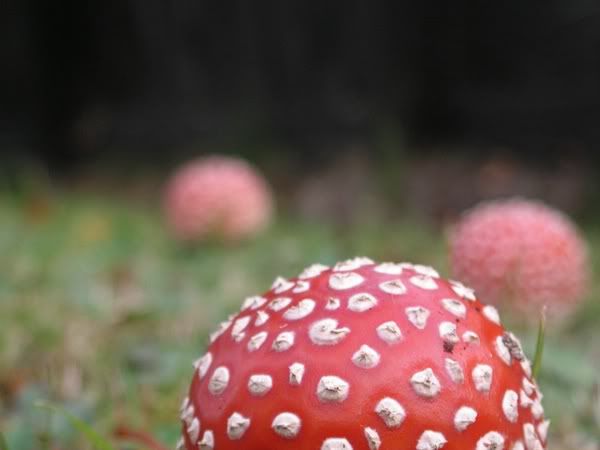
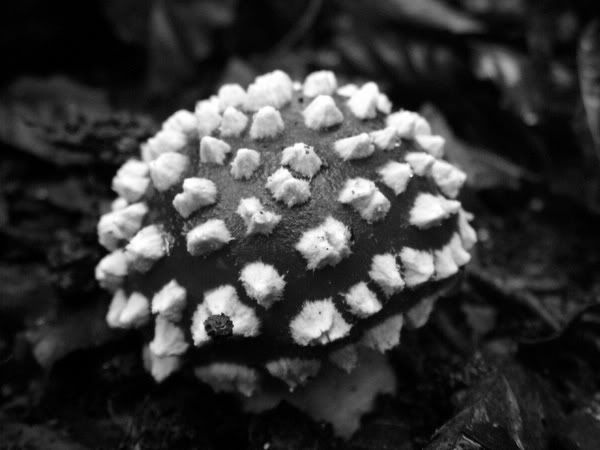
The above picture isn't just my tribute to a famous internet meme - it's also the only sign I can notice of a vast community sprawling under my front lawn. Mushrooms and toadstools like the ones above are the visible protuberances of larger organisms - the tip of fungal icebergs. Most of the growth of these organisms comes in thin threads of cells called hyphae which extend through the soil - Stephen Jay Gould wrote of one such organism that covered some 30 acres in an essay entitled A Humungous Fungus Among Us.A mushroom usually happens when hyphae from two different organisms meet and fuse, fused hyphae will eventually(maybe decades after their fusion) go on to produce a spores and a fruiting body (the actual mushroom) as a means of dispersing them.
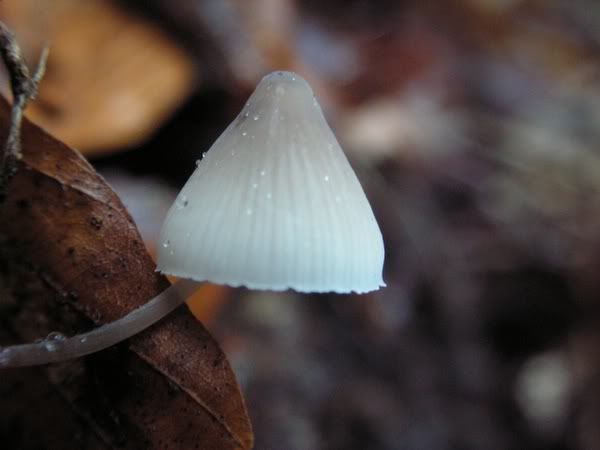
Apart from being really cool fungi have a massive ecological importance. Fungi are often the first forms of live to invade dead logs on the forest floor. It's this action that allows the formation of the 'saproxylic community" - micro-invertebrates like springtails and mites eat the fungi which starts to free up the resources locked in the logs for organisms like earthworms. At the same time the whole saproxylic community that forms make great meals for snails and Peripatus and all the charismatic megafauna people are so keen on preserving. Still, fungi play an ecological role that is even more important than invading fallen logs. Most plants have colonies of 'mycorrhizal' fungi that live on their roots. These fungi live in very tight symbiotic relationships in which the plants are very dependant on the fungi for various nutrients they can't take from the soil while fungi rely on the plants for sugars derived from photosynthesis. Mycorrhizal fungi are thought to be a key factors determining the ability of plants to colonise new areas.
By basing this little discussion on the photos I've taken I have focused on those few fungi that actually go in for such elaborate means of dispersing themselves as fruiting bodies. In fact the few mushrooms that you do see from time to time aren't simply the tip of subterranean icebergs - they are the tip of a very small percentage of a very great number of fungi living in the soil. Most fungi reproduce by fission (like yeasts) or budding off at their hyphae. Still, there is something a little special about those few that allow us a peak into the lives they lead underground so here is one last photo:
Thursday, June 01, 2006
The 9th Circle of spinelessness
The seasons must be changing in the northern hemisphere - it seems scores of insects have emerged fro their hibernation to completely take over this month's circus of the spineless (I count one non-insect post!)
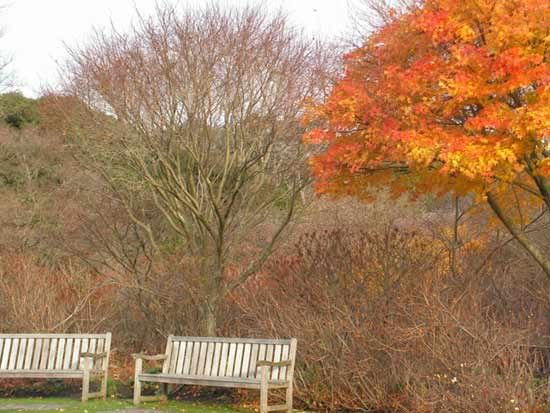
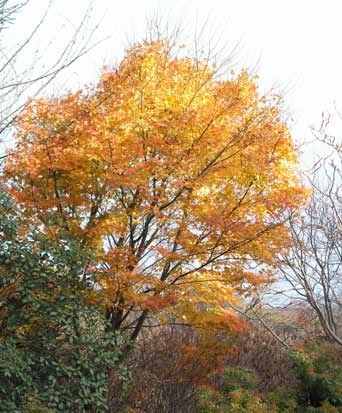
Down here in the deep south it's starting to really turn cold and most of the interesting insects hae hidden over-winter or laid their eggs and got out of here. But here are still some beautiful autumnal sights to be seen in the Dunedin Botanic Gardens, here's a couple of photos I took yesterday: